
CELEBRITY
MEGHAN & HARRY FACE A BRUTAL REALITY CHECK! 🇬🇧👑 The Sussexes may be hoping for a fresh chapter in Britain, but questions about public trust, royal tensions, and their future remain impossible to ignore. Is a UK comeback already facing an uphill battle? 🔥

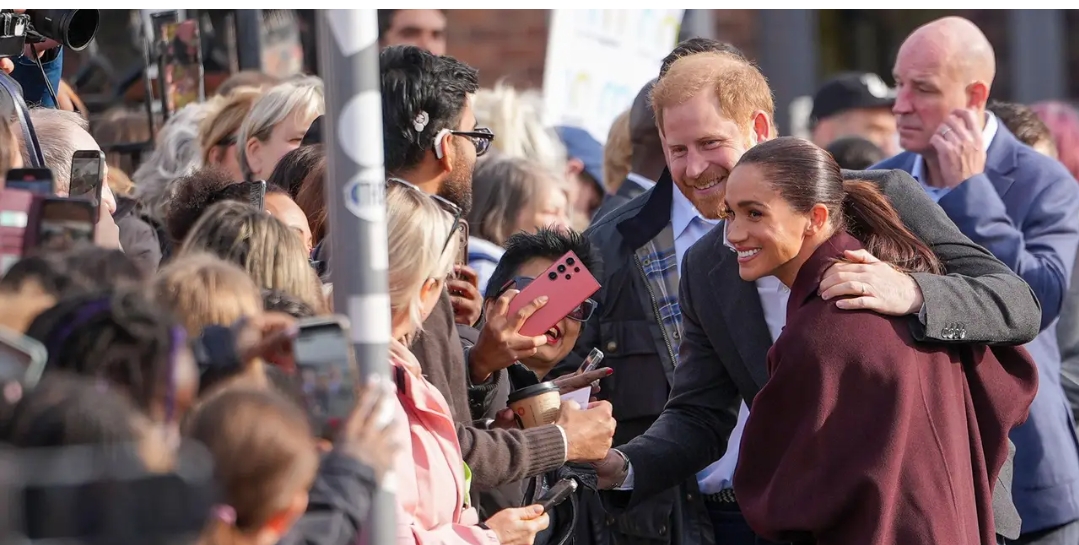
There were reasons to believe that the Duke and Duchess of Sussex might have enjoyed a burst of popularity on their return to live in the UK after six years away. Harry was once the joint most popular member of the royal family, alongside his brother the Prince of Wales, and his return could signify a willingness to bury the hatchet with William.
Meghan and Harry Face a Brutal Reality Check as New Poll Reveals Britain’s Verdict on Their Sussex Return
Prince Harry and Meghan Markle are facing fresh questions about their standing in Britain after new polling revealed a decline in their popularity, raising doubts about whether their return can win over a sceptical public.
Prince Harry and Meghan Markle may be hoping for a fresh chapter in Britain, but the latest public opinion figures suggest that rebuilding their reputation could be far more difficult than they anticipated.
The Duke and Duchess of Sussex have remained among the most discussed figures in the royal family since stepping back from their senior working royal roles in 2020. Their move to the United States, subsequent media appearances and strained relationships with some members of the royal family have continued to generate headlines on both sides of the Atlantic.
Now, fresh polling has delivered an uncomfortable picture of their public standing.
According to YouGov’s royal family favourability tracker published on October 29, 2026, only 29 per cent of Britons have a positive opinion of Harry, while 60 per cent view him unfavourably. Meghan’s figures are even more challenging: just 20 per cent view her positively, compared with 68 per cent who hold a negative opinion.
For the Sussexes, the numbers represent a significant public relations challenge at a time when their future in Britain is attracting renewed attention.
However, the findings do not mean that every Briton opposes their return. Instead, they reveal a couple whose public image remains deeply divisive.
Meghan and Harry’s Popularity Faces a Fresh Test
The latest YouGov findings suggest that the Sussexes have struggled to improve their standing among the British public.
Harry’s positive rating fell four percentage points from July, while Meghan’s negative rating increased by three points over the same period. Her net favourability rating reached minus 48, the lowest recorded by YouGov’s tracker to that point.
These figures offer a striking contrast with the more favourable reception the couple can receive among some younger audiences and supporters overseas.
For Harry, the challenge is particularly complicated. He was once a popular member of the royal family, widely recognised for his military service, charitable work and public appearances alongside his brother, Prince William.
Meghan’s early years as a royal also attracted considerable international interest, with many observers welcoming her arrival into the monarchy.
Their subsequent departure from royal duties changed the conversation dramatically.
Since then, disagreements over their royal roles, public interviews and Harry’s memoir, Spare, have contributed to a prolonged dispute that continues to shape how many people perceive them.
Whether the latest figures represent a temporary setback or a longer-term shift remains to be seen.
Britain Is Not Entirely Against a Sussex Return
Despite the negative favourability ratings, the picture is more complicated than a straightforward rejection of Harry and Meghan.
An Ipsos poll published in September 2026 found that 48 per cent of Britons neither supported nor opposed the couple returning to live in the United Kingdom. Eighteen per cent supported the move, while 29 per cent opposed it.
The findings suggest that many people do not necessarily regard the Sussexes’ living arrangements as a major concern.
That distinction matters.
Public opinion about whether a couple should live in Britain is not the same as public opinion about whether they should resume official royal duties.
Some Britons may accept Harry and Meghan as private individuals while remaining opposed to their return as working members of the monarchy.
Indeed, a separate YouGov survey published in September found that 51 per cent of respondents preferred that the couple not return to official royal duties, compared with 16 per cent who supported such a move. A further 33 per cent were undecided.
The distinction is central to understanding the Sussexes’ position. A return to Britain does not automatically mean a return to royal responsibilities, nor does it guarantee a reconciliation with every member of the family.
Why the Royal Family Question Remains So Sensitive
Harry and Meghan’s relationship with the royal institution deteriorated after they announced their decision to step back from senior royal responsibilities in 2020.
The couple subsequently established a life in California, where they pursued commercial projects, media work and charitable initiatives.
Their departure was followed by a series of public revelations about their experiences within the monarchy. Harry’s memoir and the couple’s televised interviews intensified scrutiny of their relationships with senior royals.
Supporters have argued that Harry and Meghan were entitled to explain their experiences and establish greater independence. Critics, meanwhile, have questioned the timing and consequences of their public disclosures.
These competing interpretations have made reconciliation difficult to discuss without reopening old arguments.
For the monarchy, the challenge is balancing family relationships with the institution’s public responsibilities. For the Sussexes, it is finding a way to maintain their independence while navigating the expectations that accompany their royal titles.
The latest polling suggests that the couple cannot assume that a change of address will automatically change public opinion.
Prince William and Catherine Remain Stronger in the Polls
The latest YouGov tracker also highlights the gap between public perceptions of the Sussexes and those of the Prince and Princess of Wales.
William and Catherine continue to enjoy considerably stronger favourability ratings, with approximately 72 to 74 per cent of Britons viewing them positively.
Their popularity provides an important contrast in a royal family where competing narratives about duty, independence and personal relationships have dominated public discussion for years.
However, favourable ratings do not necessarily reveal everything about private family relationships.
A popular public image cannot tell us whether reconciliation is possible behind closed doors, just as negative polling does not establish what individual family members privately think about one another.
For Harry and William, the question of whether their relationship can improve remains separate from their respective public approval ratings.
Harry has previously expressed a desire to reconnect with his family, and reports of contact with King Charles have fuelled speculation about whether relations could gradually improve.
Any lasting reconciliation, however, would require more than favourable headlines. It would depend on private conversations, mutual trust and a willingness to address longstanding disagreements.
Security and Family Life Add Another Layer
Security has also remained an important issue in discussions about Harry’s future in Britain.
After the Sussexes stepped away from working royal duties, their arrangements for publicly funded police protection changed. Harry subsequently challenged the decision through the courts but lost his legal appeal in 2025.
In September 2026, the Royal and VIP Executive Committee began a fresh security review following the couple’s reported return to Britain as full-time residents.
The question is particularly significant because Harry has repeatedly argued that security arrangements affect his ability to bring his family to the United Kingdom.
The issue involves practical considerations about risk assessments, public resources and the protection of high-profile individuals. It should not be confused with a referendum on whether Harry and Meghan are personally welcome in the country.
Their children, Prince Archie and Princess Lilibet, also form part of the family’s long-term considerations as the Sussexes navigate life between royal heritage and private independence.
Ultimately, security decisions and public approval are separate matters, even though both can influence how the family’s future is discussed.
Can Meghan and Harry Rebuild Their Reputation?
The latest figures present a difficult challenge, but they do not necessarily determine the Sussexes’ future.
Public opinion can change, particularly when people see new behaviour, different priorities or a sustained effort to move beyond past disagreements.
For Harry, rebuilding relationships with members of his family could become an important part of that process. For Meghan, establishing a public identity that is not constantly defined by royal controversy may also prove valuable.
Neither task is likely to be straightforward.
The couple remain prominent international figures, and their every move attracts attention from supporters, critics and royal commentators. That visibility provides opportunities to communicate their priorities, but it also ensures that controversies can quickly return to the headlines.
Their most significant challenge may be persuading the public to judge their future actions independently of the disputes that have shaped their reputation.
The Verdict: A Difficult Road Ahead for the Sussexes
The latest polling delivers an uncomfortable message for Meghan and Harry: their popularity in Britain remains weak, and enthusiasm for restoring them to official royal duties is limited.
But the evidence does not support the claim that the entire country has rejected them or that their return is universally unwelcome.
Many Britons remain indifferent to the couple’s living arrangements, while others support reconciliation within the royal family.
The real question is whether Harry and Meghan can rebuild trust, maintain their independence and establish a more stable relationship with the institution they once represented.
For now, the numbers show that their public image remains a significant obstacle.
Do you think Meghan and Harry can rebuild their reputation in Britain, or will the royal rift continue to define their future?

Taylor Swift and Travis Kelce’s reported MSG celebration has sparked endless curiosity, from celebrity arrivals to the extravagant decorations and closely guarded details. What happened behind those doors?

MEGHAN & HARRY FACE A BRUTAL REALITY CHECK! 🇬🇧👑 The Sussexes may be hoping for a fresh chapter in Britain, but questions about public trust, royal tensions, and their future remain impossible to ignore. Is a UK comeback already facing an uphill battle? 🔥

The Spotlight US poll: Taylor Swift’s team had her multimillion-dollar wedding set destroyed, insider revealed. Was that the right call?

🚨 BREAKING? R. KELLY DEATH CLAIM SPARKS SHOCK! 💔🕊️ A shocking claim about R. Kelly’s death is making waves, and fans need answers NOW. Is this real, or is social media spreading another unverified rumor? 👀 Don’t fall for fake news—check the facts and share your reaction below! 👇

💔😭👀Tom Holland has unfollowed Zendaya on Instagram and also posted this after the Zendaya and Timothee Chalamet kiss footage from the Dune Part 3 red carpet went viral.

Taylor Swift Finally Shares the First Official Exclusive Look at Her Custom Christian Dior Wedding Looks in Newly Released Wedding Photos After Persistent Daily Mail Leaks, as a Wedding Guest’s Stunning Portrait of Taylor and Travis Kelce’s Wedding Attire Is Exclusively Revealed by the Daily Mail

TAYLOR SWIFT & TRAVIS KELCE ARE LIVING THEIR DREAM LOVE STORY! 💕🔥 The couple looks happier than ever, laughing on a luxury yacht, diving into crystal-clear waters, and soaking up every second of their dreamy seaside escape! 🌊☀️ SEE THE 15 BEAUTIFUL PHOTOS AND 5-MINUTE CLIP!

🚨🔥 WHOA Zendaya (FIANCÉE to Tom Holland) kissed Timothée Chalamet on the red carpet for DUNE: Part 3 😳 In the face of fierce criticism from her fans, she described the kiss as “staged” 💔😪

🚨😳 WEST HOLLYWOOD’S MOST SCANDALOUS MARRIAGE EVER?! THIS IS THE HOLLYWOOD DRAMA EVERYONE WILL WANT TO TALK ABOUT! 🔥💣 From picture-perfect romance to questions about what happens behind closed doors, the fascination is REAL. But which couple deserves the title? 👀 READ THE STORY, DROP YOUR HOTTEST TAKE, AND REPOST TO START THE DEBATE! 👇

🚨😳 THEY DIDN’T JUST KEEP THE WEDDING SECRET—THEY ALLEGEDLY WANTED THE DECOR GONE TOO! 💍🔥 Taylor Swift and Travis Kelce’s supposed fairy-tale wedding is sparking HUGE questions after reports claimed the entire set was burned to leave no trace. Is this the ultimate celebrity privacy move? 👀🔥 READ MORE, SHARE YOUR TAKE, AND LET THE DEBATE BEGIN! 👇

“WEDDING BOMBSHELL EXPOSED!” TAYLOR SWIFT CONFESSES TO MOTHER ANDREA! What deeply emotional secret about rushing to walk down the aisle and building a permanent future with Travis Kelce did the global superstar just reveal in a heart-to-heart with her mom? Read the complete exclusive report now!
