
CELEBRITY
🇺🇸🇨🇳🇮🇷 ONE STEP FROM WORLD WAR III: IF THE U.S. TOUCHES A SINGLE CHINESE TANKER IN HORMUZ, CHINA WOULD ENTER THE WAR

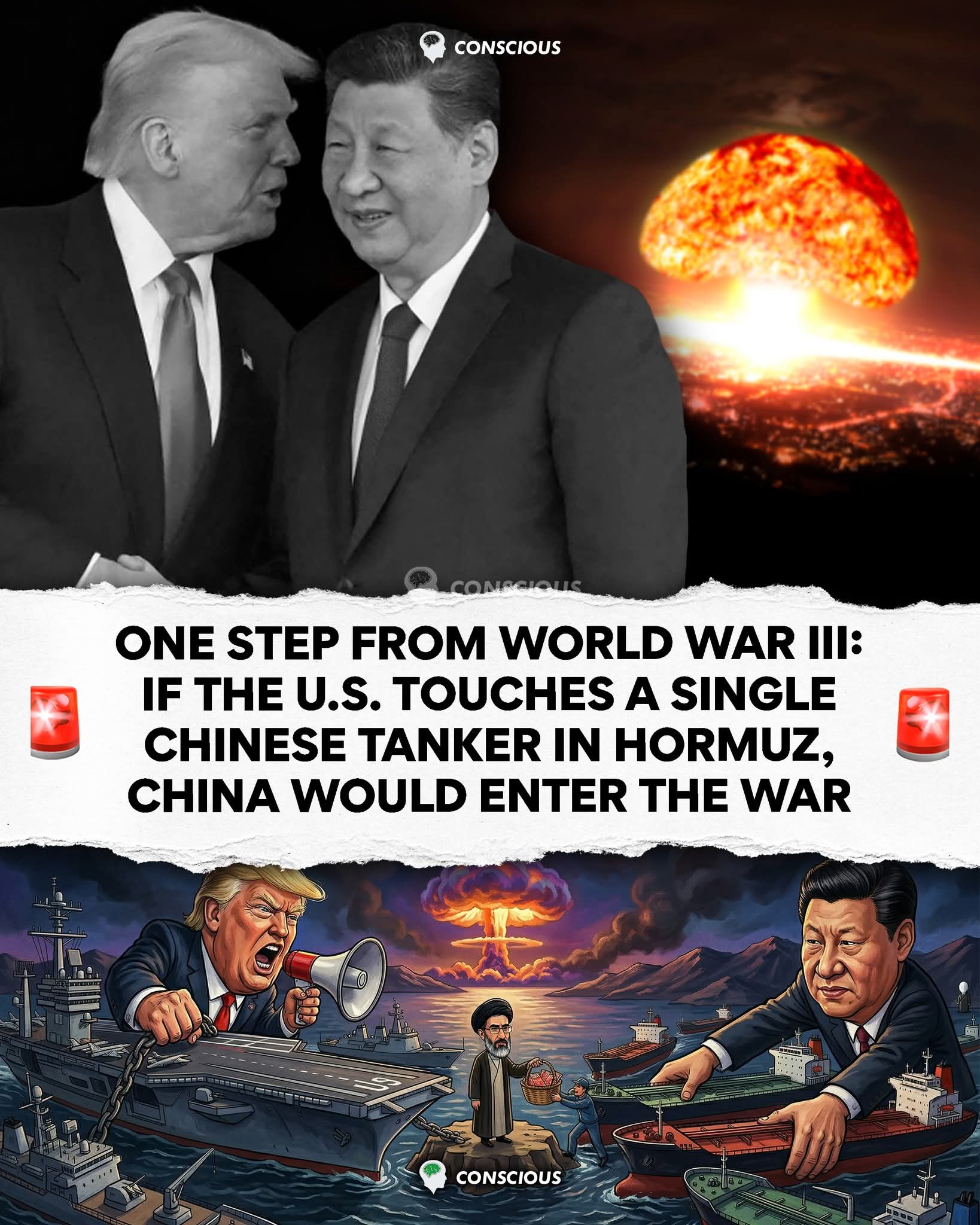
📡 CENTCOM confirmed the total naval blockade of the Strait of Hormuz begins Monday April 13 at 10am ET. Trump ordered the interception of “any and all ships entering or leaving” the strait, including those that paid tolls to Iran. Here’s the problem: the main vessels transiting Hormuz with Iranian permission have been Chinese oil tankers.
🛢️ China is Iran’s largest oil buyer. Throughout the war, its tankers have crossed the strait under Iranian protection, paying in yuan directly to the Revolutionary Guard. Trump just ordered the interception of exactly those ships.
📊 Experts warn this is the most dangerous point of the conflict. If the U.S. stops, boards or attacks a Chinese tanker, Beijing would have to respond. China already vetoed the UN resolution on Hormuz alongside Russia, is reportedly preparing to ship air-defense systems to Iran, and Trump already warned Beijing of “big problems.”
🌊 A U.S. Naval Institute analyst puts it this way: none of the options are clean. Escalating against China would drag the world into a conflict between its two largest powers. Not escalating means the blockade is just on paper.
🌍 What begins tomorrow in Hormuz is no longer just the U.S. versus Iran. If a Chinese tanker gets caught in the middle, the escalation could be catastrophic.
Tensions are boiling over as the strategic Strait of Hormuz becomes the center of a high-stakes global standoff. 🇮🇷🇺🇸🇨🇳
Reports and rhetoric suggest a dangerous red line: if the United States intercepts or strikes a Chinese oil tanker in the region, China could respond militarily—potentially escalating a regional crisis into a global conflict.
⚠️ Why this matters: • The Strait of Hormuz handles a massive share of the world’s oil supply
• Any disruption could trigger a global energy shock 💥
• Direct confrontation between the U.S. and China would mark an unprecedented escalation
🇨🇳 Beijing has repeatedly emphasized protecting its energy lifelines.
🇺🇸 Washington has signaled it will enforce maritime security and counter threats.
🇮🇷 Iran remains a key player controlling access to this critical chokepoint.
🔥 The reality:
This is a fragile, high-risk situation—but also one where strong words and strategic signaling are often used to deter action, not guarantee it.
🛑 Bottom line:
The world is watching closely. One miscalculation could change everything—but diplomacy and restraint still remain the most likely path forward.
👇 What do you think—real threat or geopolitical pressure tactics?

🚨 JUST IN: Hoekstra Suddenly NEEDS Canada, Carney SHUTS Him Down To His Face

🚨Trump gets HOSTILE as Supreme Court Justice Orders Immediate ARREST!!⚡..

Donald Trump’s Fart Sends the Room Into Chaos — Melania Can Only Say “OMG!” ▶️Watch the full moment⤵️

BREAKING LIVE: Melania Trump PANICS After Amanda Ungaro LEAKS Shocking Audio! ▶️Watch the full moment⤵️

“ARE Y’ALL BLIND TO WHAT’S COMIN’, OR ARE YOU JUST TOO SCARED TO SAY IT?”

FURIOUS Police Chief GIVES FINAL WARNING to Trump! ▶️Watch the full moment⤵️

WHOA! Press Sec JUST BLEW Trump Immunity with BLUNDER — Trump DECISIVELY Removes Karoline Leavitt from the White House Team! ▶️Watch the full moment⤵️

Shockwaves hit Roland Garros after a dramatic upset saw Marta Kostyuk deliver a fearless performance to … full shocking details ⤵️

CANADA JUST DID SOMETHING THE U.S. NEVER THOUGHT WOULD HAPPEN…full shocking details ⤵️

Massive FIREBALL Engulfs Putin’s Naval Pride FULL ARTICLE⤵️

Canada was shocked by an explosive showdown on live television when Tom Mulcair launched a relentless and brutal attack on the Canada Prime Minister, Mark Carney, exposing what he called an empty, rote politician full of hypocrisy. In the extremely sharp monologue, Tom Mulcair harshly criticized Mark Carney’s immigration policies, economic decline and leadership failures, while painting him as a helpless puppet of the background power. The heated showdown sent shockwaves across the country and prompted many viewers to reconsider Mark Carney’s credibility and political identity. Read the full details below and see how Carney reacted! ⤵️⤵️
