
CELEBRITY
The Brutal Reality Check PRINCE HARRY FACING BRUTAL QUESTIONS! Maureen Callahan delivers a scathing verdict, describing him as dead-eyed and exhausted while questioning whether he knows his public standing is slipping. Is this a turning point? Read the full take and tell us if you agree! 👇

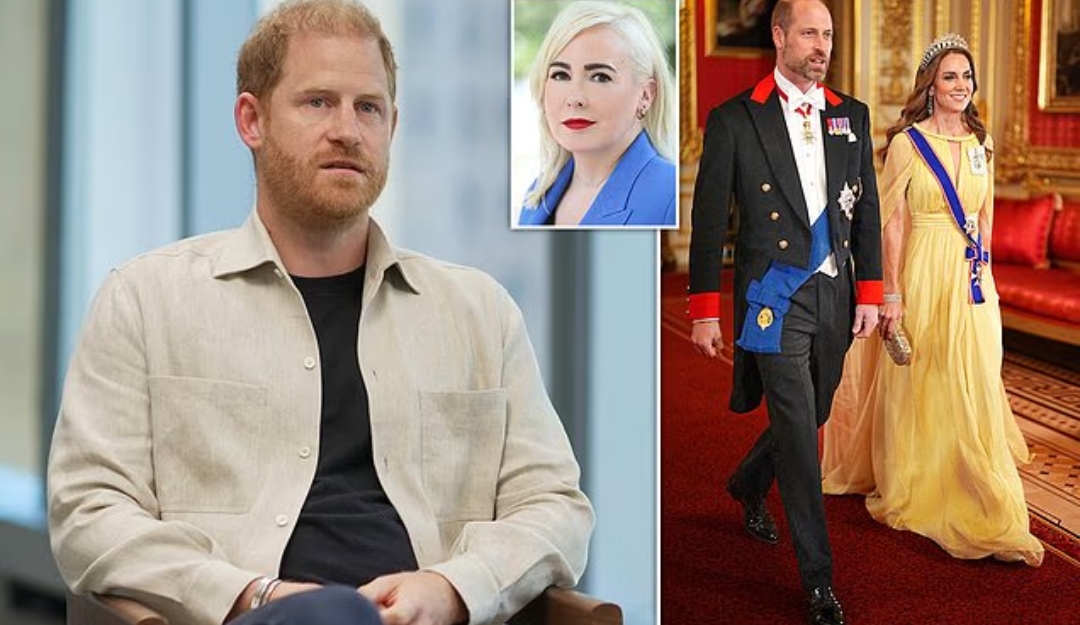
Prince Harry has spent years trying to build a life beyond the British monarchy, but the question of whether that decision has brought him the freedom and fulfilment he wanted continues to fuel debate. Now, a provocative assessment by commentator Maureen Callahan has reignited discussion about the Duke of Sussex, his public image, and what the future might hold for the once-popular royal.
In a sharply worded opinion, Callahan describes Harry as looking “dead-eyed and exhausted” and argues that he should acknowledge what she believes may be an increasingly difficult reality. Her assessment is deliberately provocative, raising an uncomfortable question: has Harry’s post-royal life delivered the future he imagined, or has the battle to establish himself outside the monarchy become a challenge of its own?
The language is harsh, but the wider debate is worth examining. Harry’s departure from senior royal duties, his decision to settle in California with Meghan Markle, and his subsequent media projects have transformed his public identity. Whether those changes represent independence, a costly break with tradition, or some combination of both remains a matter of interpretation.
Prince Harry’s Life Beyond the Palace
Harry’s departure from his role as a senior working royal in 2020 marked a defining moment for the British monarchy. Together with Meghan, he stepped away from the traditional expectations associated with royal life and pursued greater independence in the United States.
The decision attracted enormous attention because it represented more than a change of residence. It challenged long-established assumptions about royal duty, privacy, public service, and the relationship between the monarchy and the media.
For Harry, the transition offered an opportunity to pursue projects outside the restrictions of his former position. For critics, however, it created questions about how he and Meghan would sustain public interest while building a life separate from the institution that had made them internationally recognisable.
That tension continues to shape the way the couple are discussed.
Why Maureen Callahan’s Criticism Has Struck a Nerve
Callahan’s language is designed to provoke a reaction. Describing a public figure as exhausted or suggesting that everything may be over is a forceful way of questioning their direction and influence.
But there is an important distinction between a commentator’s impression of someone’s public appearance and reliable evidence about their emotional state.
Photographs, brief public appearances, and edited television footage cannot establish what a person is experiencing privately. Nor can they prove that someone has lost hope, regrets a major life decision, or believes their future is bleak.
Nevertheless, Harry’s public image has long been a subject of intense scrutiny. Supporters see a man attempting to establish boundaries and make independent decisions. Critics argue that his continuing engagement with royal controversies risks keeping him tied to the very institution he chose to leave.
Callahan’s assessment taps directly into that divide.
The result is a familiar question in the ongoing Sussex debate: is Harry successfully building a different kind of life, or does his public identity remain inseparable from his royal past?
The Challenge of Building an Identity Outside the Monarchy
Leaving the royal establishment did not mean leaving behind the public fascination with Harry. His title, family relationships, childhood experiences, and position in the line of royal succession continue to attract attention around the world.
That visibility can be an advantage. It creates opportunities for charitable initiatives, media projects, public speaking, and commercial partnerships that would be difficult for many people to secure.
Yet celebrity built around a famous institution presents a particular challenge. An individual may seek independence from that institution while still relying on the public’s interest in their relationship with it.
Harry’s memoir, Spare, brought personal accounts of his experiences and family relationships to an enormous audience. His interviews and public statements have likewise kept aspects of his royal history in the headlines.
Supporters argue that telling his own story gives Harry control over experiences that were previously discussed largely by others. Critics question whether repeatedly revisiting family disputes makes it harder to move beyond them.
Both perspectives point to the same underlying difficulty: establishing a new identity when the old one remains central to public curiosity.
Has Harry’s Public Image Changed?
Harry’s reputation has evolved considerably since his younger years as a working royal. Once widely celebrated for his military service, charitable initiatives, and informal public manner, he is now a figure who inspires sharply divided reactions.
For some observers, his willingness to challenge royal conventions demonstrates independence and a desire to protect his family. For others, his public criticism of the monarchy has damaged relationships and complicated his efforts to present himself as a figure moving forward.
The reality is more complicated than either side’s most dramatic interpretation.
Public opinion is not fixed, and media attention does not necessarily translate into lasting success or failure. A controversial headline can generate immediate discussion without revealing much about a person’s long-term prospects.
Likewise, a difficult period in public relations does not establish that someone’s career, marriage, charitable work, or personal ambitions are approaching an end.
To judge Harry’s future fairly, it is necessary to look beyond a single commentator’s description and consider his actual projects, public commitments, and longer-term goals.
Meghan Markle and the Sussexes’ Next Chapter
Harry’s future is also frequently discussed alongside Meghan’s ambitions and the couple’s shared life in California.
Their decision to establish a household away from Britain represented a major change for both of them. Since then, public attention has followed their professional projects, charitable activities, business ventures, and occasional appearances.
The intense scrutiny can make every development appear to be a referendum on whether their decision to leave royal duties was justified.
However, a fair assessment requires more than speculation about their private relationship or assumptions based on public appearances. Without reliable evidence, claims that either partner is unhappy, exhausted by the other, or secretly regretting their choices should not be treated as fact.
What can be said is that the Sussexes continue to operate in an environment where their every major move is interpreted through the history of their departure from royal life.
That reality makes separating genuine setbacks from sensational commentary particularly important.
Is It Really All Over for Prince Harry?
Callahan’s provocative assessment invites readers to consider whether Harry’s post-royal strategy has delivered the results he wanted. It does not, by itself, establish that his future is finished or that he privately shares her conclusions.
The more meaningful question is how Harry defines success today.
If success means maintaining a conventional relationship with the royal establishment, his departure has clearly placed him on a different path. If success means exercising greater control over his family’s life and pursuing independent projects, the assessment becomes more complicated.
There is also the question of public relevance. Harry remains a globally recognised figure, and continuing interest in his decisions suggests that his story has not disappeared from public conversation.
Whether that attention ultimately benefits him depends on what he chooses to do with it.
Perhaps the most revealing measure of his next chapter will not be whether critics approve of him, but whether he can develop a sustainable identity that is not constantly defined by conflict with his former institution.
For now, the claim that it is “all over” remains a dramatic opinion rather than an established conclusion.
Final Verdict: A Royal Future Still Under Debate
Maureen Callahan’s criticism has given fresh energy to the debate surrounding Prince Harry’s life outside the monarchy. Her blunt description challenges readers to question his public image and consider whether his post-royal direction is working.
But the difference between a powerful headline and a proven reality matters. Harry’s appearance cannot reveal his private feelings, and predictions about his future remain speculative.
The bigger story is the continuing struggle to understand what independence means for someone whose identity has been shaped by one of the world’s most recognisable institutions.
What do you think? Has Prince Harry successfully built a new life away from the monarchy, or does his royal past continue to overshadow his future? Share your opinion and join the debate.

King Charles’ Palace Responds to Meghan Markle’s Family Crisis — And Draws a Brutal Line

John Cena is reportedly battling cancer in a hospital bed, raising concerns about his health and sparking widespread speculation online.😢

Taylor Swift and Travis Kelce Turn Heads on New York Dinner Date as Fans Get Another Glimpse of Their Romance

🚨😱 CAUGHT ON CAMERA IN FRANCE?! Ferran Torres and Sydney Sweeney Spark MASSIVE Romance Rumors After Intimate Boat Outing — One Unexpected Moment Has Fans STUNNED! 🚤🔥👀

Taylor Swift, 36, and Travis Kelce, 37, Overshare During a Steamy Makeout Session on a Private Beach at Lake Quivira in Kansas City Days Before the Chiefs vs. Seahawks Game, but Fans Are Stunned by What the Photos Reveal

PRINCE WILLIAM SPARKS A FRENZY AFTER CLAIMS HE TRIED TO BLOCK TRAVIS KELCE OUT OF A VIRAL PHOTO WITH TAYLOR SWIFT! Was it an awkward royal moment or a misunderstanding that fans have blown wide open? The internet is dissecting every detail, and reactions are getting intense! 😳🔥 WHAT REALLY HAPPENED? Drop your verdict below and SHARE this with every Swiftie! 👇

🚨❤️ JASON KELCE JUST EXPERIENCED AN UNFORGETTABLE FULL-CIRCLE MOMENT! The Philadelphia Eagles legend celebrated a major Hall of Fame milestone in Cincinnati with Taylor Swift, Travis Kelce, Kylie Kelce and Donna Kelce by his side. The emotional family gathering has fans talking! 😭🔥 This is the kind of moment that hits differently! What a celebration! 👇❤️ CLICK, SHARE, AND TELL US YOUR REACTION!

Taylor Swift and Her Husband Travis Kelce Share a Relaxed, Affectionate Moment While Vacationing at Lake Como, Italy, Ahead of the Chiefs vs. Seahawks Game, but Fans Notice Something Unexpected About Taylor’s Appearance and Are All Asking the Same Question

Taylor Swift Shows Off Her Sculpted Bikini Body During a PDA-Filled Lake Como Getaway With Husband Travis Kelce as the Newlyweds Enjoy Their Romantic Era—But Her Sweet Stomach-Rubbing Moment Has Fans Buzzing With Pregnancy Speculation…See 15 beautiful photos here ⤵️

Taylor Swift and Husband Travis Kelce Share a Relaxed, Affectionate Moment While Vacationing at Lake Como, Italy, After the Chiefs vs. Chargers Game, but Fans Notice Something Unexpected About Taylor’s Appearance and Are All Asking the Same Question

🚨😍 TRAVIS KELCE AND TAYLOR SWIFT SPOTTED HOLDING HANDS AND KISSING ON A ROMANTIC PARIS GETAWAY — BUT ONE DETAIL ABOUT TAYLOR’S APPEARANCE HAS FANS ZOOMING IN AND ASKING QUESTIONS…👇
