
NEWS
Bukele Asked Spain to Send Back a Dangerous Mara 18 Gangster Named “Garrobo” — Sánchez’s Government Said No, Citing Human Rights, and Now Spanish Taxpayers Are Paying €28,536 a Year to Keep Him in Prison While Bukele Laughs About It

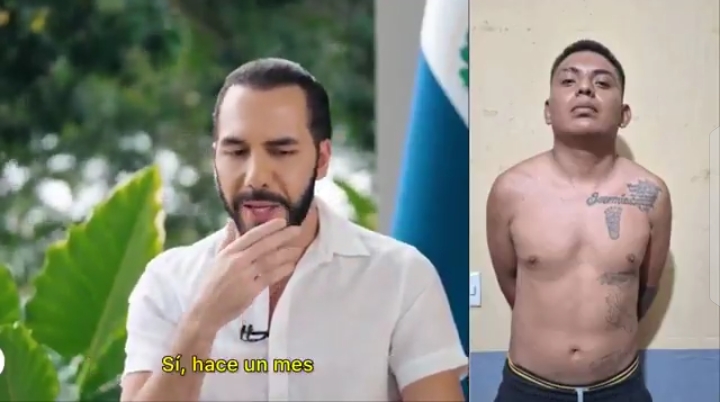
In a case that has reignited debate over crime, extradition, and human rights priorities, El Salvador’s President Nayib Bukele requested the return of a Mara 18 gang member known as “Garrobo.” Spanish authorities under Pedro Sánchez’s government refused, citing risks to the man’s fundamental rights under El Salvador’s aggressive anti-gang policies.
The individual remains in a Spanish prison, where the annual cost of his upkeep has been widely cited at €28,536 — a figure that has fueled public frustration among those who question why Spanish taxpayers should bear the expense.The story traces back to an international police operation.
Spanish authorities, working with Salvadoran police and Interpol, arrested the man in Loiu (Vizcaya) after he fled El Salvador. He was identified as a member or former collaborator of the “18 Revolucionarios,” a faction linked to the Barrio 18 (Mara 18) gang. El Salvador sought his extradition on charges of illicit association (belonging to a criminal organization), requesting a sentence of three years and four months.
In May 2024, Spain’s Audiencia Nacional denied the extradition request. The court sided with the public prosecutor, arguing that the ongoing state of exception in El Salvador — declared as part of Bukele’s crackdown on gangs — created an exceptional risk to the individual’s life and physical integrity. Judges referenced reports from the Inter-American Commission on Human Rights and Amnesty International criticizing aspects of the Salvadoran policies, including large-scale detentions and conditions in facilities such as the Terrorism Confinement Center. Spanish law allows refusal of extradition when there is concrete evidence of potential serious violations of fundamental rights.
Bukele later recounted the episode during a June 2024 interview with Tucker Carlson. He described how Spanish police had proudly announced the arrest as part of a successful joint operation. Bukele publicly welcomed the capture and indicated El Salvador was ready to take the man back. According to the president, that statement was later used in the Spanish court proceedings as evidence that the suspect would not receive a fair trial or adequate treatment in El Salvador. “So he was protected by Spanish laws and he stayed there in Spain,” Bukele said, adding with evident amusement that Spain now had “an extra gang member” to house and feed. Carlson quipped that Spain might not have enough of them; Bukele agreed.
The case has circulated widely again in recent weeks through social media clips of Bukele’s remarks. Critics in Spain highlight the financial burden: reports and viral posts put the yearly maintenance cost for the prisoner at approximately €28,536. Supporters of Bukele’s approach point to El Salvador’s dramatic reduction in homicides and gang violence under the state of exception, arguing that prioritizing the rights of a known gang affiliate over public safety and fiscal responsibility sends the wrong signal. Defenders of the Spanish decision emphasize that European and Spanish legal standards require concrete safeguards against potential abuses, particularly amid documented concerns about mass detentions and prison conditions abroad.The episode illustrates a broader clash of priorities.
Bukele’s government has transformed El Salvador from one of the most dangerous countries in the hemisphere into one of the safest through decisive, large-scale action against the maras, including MS-13 and Barrio 18. International human rights organizations have raised persistent objections to the methods. Spain’s refusal reflects its own legal framework, which prioritizes protection against risks of ill-treatment even when the requested person is accused of serious organized crime.For Spanish taxpayers, the practical result is straightforward: a gang member who fled El Salvador remains in their prison system, with the associated costs covered by public funds.
For Bukele, the anecdote serves as a pointed example of what he views as misplaced Western priorities — protecting the rights of killers and gang members while victims and citizens bear the consequences. The debate continues, with the case of “Garrobo” serving as a vivid illustration of the tensions between hardline crime control and international human rights standards.

Stunning! Paige Spiranac stuns with incredible busty mirror selfie after golf influencer reveals she ‘hooked up’ with women

Golf Influencer Paige Spiranac Opens Up About Why She Could Date Women

BREAKING: Travis Kelce named victim in massive $35M Ponzi scheme as fraudster gets 11 years in prison ⛓️💥

Travis Kelce was named as a victim in a multimillion-dollar Ponzi scheme that landed its operator in federal prison.

Klamka zapadła, mówi o tym cała Polska 😮

Wiadomo o co chodzi!

Dobra reakcja?

Z ostatniej chwili, takiego obrotu spraw nikt się nie spodziewał 😱

President Trump blasted the “Crooked Joe Biden FBI” and “Dirty Cop Christopher Wray” after new details emerged concerning Butler, Pennsylvania, would-be assassin Thomas Crooks.

Inside Taylor Swift’s ‘top secret’ Emmys appearance – and the gift she gave cast

PATRICK MAHOMES DECLARES FULL FITNESS FOR SEASON OPENER AFTER GRUELING OFFSEASON KNEE REHAB JOURNEY! 🚨 Did months of painful physical therapy and a specialized custom knee brace finally pave the way for his heroic prime-time return at Arrowhead Stadium? Read the full story on his incredible recovery now! 🏈💥⚡️👇
